Pages

January 30, 2010

What is your ethnicity

After the end of the Cold War, everybody thought that there would only be the peace and love in the world. But, in fact, the worst things started to happen, especially, in Balkans and former Soviet space. People who once lived in peace together started to fight.  

There are Upper and Lower Avnevi, two villages in South Ossetia

“Out of 400 homes only 2 have remained whole from Lower Avnevi which was settled by Georgians before the August 200. Ossetian women from upper Avnevi (Ossetian settlement) guarded the two untouched houses. One of the local people, Anna, showed us the house of the remaining inhabitants of the village Zalina Bestaeva and Durmshikhan Sekturashvili. According to Anna and Zalina the village lived harmoniously until the war, they worked with the cattle together. Zalina and Durmshikhan have been married for 49 years – she is 66 and he is 68. They have two daughters, 8 grandchildren and four great-grandchildren. One of their daughters is married to a Georgian, the other to an Ossetian. In 1992 their only son was shot by a former friend on the way home from the village of Khtagurovo. In the beginning of August Zalina and her daughter’s family went to Tbilisi. But she returned after a few days to her husband, as he refused to leave the house. In their house now they have no electricity, water or gas. The mobile phone works, which the old couple use to talk to their daughters and grand children. Their grandchildren miss their grandfather terribly... Their daughter’s house was burnt down but they would be ready to come back if they are allowed to. They would first of all live with Zalina and then rebuild their home…

The second family was also a mixed family; the father was a Georgian and the wife an Ossetian. The head of the house – a farmer, self-respecting man, was in a deep depression. It was harder for him than for Zalina and her husband to survive recent events. Perhaps this is because Zalina and Durmshikhan deeply and sincerely believe in the next New World, where they will be reunited with their dead son, and they will all be happy again.”  (story here).

Ossetians were one of the most numerous ethnic groups in Georgia. According to 1989 Soviet census, Ossetians numbered 164,055 persons, with 98,823 resident outside the former autonomous region of South Ossetia. Now Approximately 38,000 remain in the rest of Georgia.  There were several mixed villages in South Ossetia. Much of the inter-ethnic mixing that existed before 1990 has been lost. A handful of ethnically mixed villages survived.

It is fascinating how neighbors and friends turned into enemies, how people who once had a lot in common end up having nothing in common. I reject the idea that there have been an ancient tribal hatred between Ossetians and Georgians. This was not so. Traditionally, both people lived peacefully with high rate of intermarriages. How did it happen, that people once ignorant to their ethnic identities no start to stick to this identity and furthermore, attack and insult people once they called friends. Why did they fight against each other? Why did they burn down houses of each other? Because of the survival of their “nation”?. But that was not the concern just few years ago….

I wish I could travel to South Ossetia. I want to find out answers to those questions. I would try to look at the similarities between Georgians and Ossetians. To me they are all the same. :)



Inguri Crossing


Inguri Crossing
Originally uploaded by DanUneken
"1995: A Georgian girl with her father after crossing the Inguri river -frontline between breakaway republic of Abkhazia and Georgia- to go to school in Georgia. Both sides permitted this kind of border crossing by non-combattants. The camera looks South, from Georgia into Abkhazia."

@DanUneken

January 28, 2010

Please, Feel Yourself at Home!

Today I heard about this great program that was offered by OSCE Mission to Georgia to teens from the region of Javakheti. They were brought to Adjara for some time to learn there at school. The goal of the project seems to be bringing community together, creating links, what will help people to understand and respect each other. Isn't it a wonderful mission? If you are not convinced, than I will remind you, that Abkhazian, Georgian and Ossetians still keep devoted exchanging teens as prisoners. Big difference between those two ideas about how to live together. opposite ways will have opposite results.

Ethnic Armenians and ethnic Georgians, both are beautiful. Watching this video gave me hope, that soon we start making more such programs on our own and we will be not for ever dependent on foreign help to bring teens from place A in Georgia to place B in Georgia. When my husband saw tears in my eyes, when children were living Adjara in this video, he asked worried: "Where are they going? Abroad? Forever?" He laughed a lot when I explained that they were still going to Georgia, just their mini bus was heading towards other region of our country. He smiled: "You just need to get often together!" That was true, we all need to get together more often, not as a members of project "exchange prisoners", but as a members of movement "share your respect and love".

I want to ask to Georgian, Abkhazian and Ossetian communities to make people, who live in their regions, feel home. We are sowing all our end if we harm people. Nobody will feel nowhere at home in our region if we teach our children something else then making feeling others with us at home. And there are no others, there are only WE.


January 26, 2010

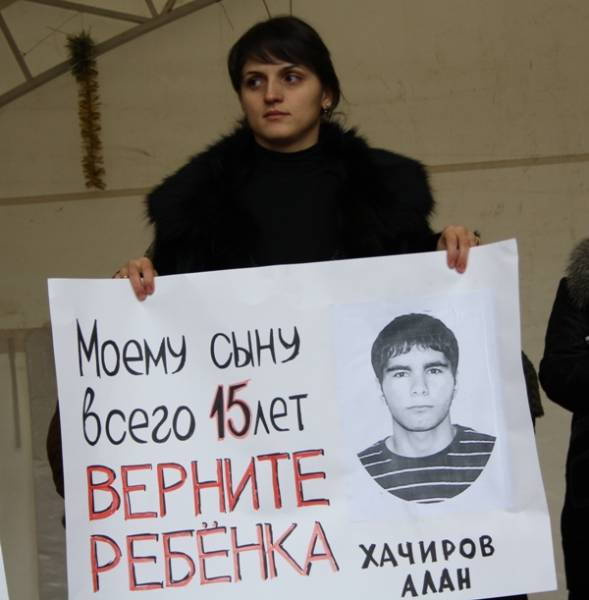
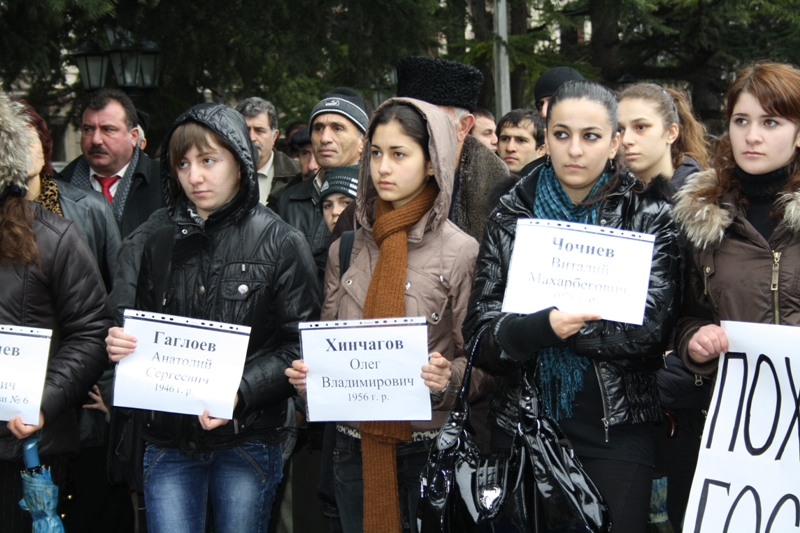
о митинге против похищений граждан РЮО. Что это было на самом деле?

Вот не хотелось на самом деле и эту тему комментировать, но когда я увидела, как некоторые осетины искренне начали про этот митинг писать, рассказывать и т.д., то мне пока стало противно. Потом я решила все-таки написать несколько моментов на эту тему. Выделю вопросы и отвечу на них, потому что вижу что многие не понимают очевидных вещей в этом море пропаганды (или не хотят понимать). Начну с митинга, который прошел в Цхинвале 15 января этого года. И подчеркиваю, что пишу только про митинг, прошедший именно в Цхинвале (а не в Брюсселе или в Москве).
Первым возникает такой вопрос: 1. к кому был обращен митинг, прошедший в Цхинвале? 2. И интересно, люди, которые писали эту новость понимали, к кому был обращен митинг, который устроили сами власти?
Отв.: 1. Когда общественность (или кто-то еще) проводят митинги, то они всегда выбирают МЕСТО проведения митинга, потому что именно НА ЭТОМ месте их призывы должны быть услышаны кем-то. Это общая концепция. Поэтому получается что митинг, организованный чиновниками, был обращен ко всем и к никому. 2. Думаю, что не понимали. Потому я сама не писала об этом, не хотела участвовать в этом фарсе. Потому что правительство Южной Осетии этим самым хотели отвести внимание пострадавших семей от себя, хотели снять с себя всю ответственность за это. И сделали это!

Вы знаете почему последний похищенный осетин (Плиев) попал к грузинским силовикам?
Отв: Потому что он был выпивший и шел домой, и случайно забрел в сторону Никози и перешел неочерченную и поныне границу. Там его и схватили грузинские силовики. Сейчас на него повесят массу статей, будут пытать чтоб признался в чем-то и т.д. А все потому что ни наше правительство, ни российское, которые подписали с Кокойты договоры о том, что будут ОБУСТРАИВАТЬ и охранять границу не сделали демаркации и делимитации границы. И потому всякие лесорубы, рыболовы или просто заблудившиеся люди нелегально пересекают границу и попадают в тюрьмы ПОЧТИ КАЖДЫЙ ДЕНЬ с обеих сторон.
При всем, что чиновники ЮО прекрасно знают о том, в каких условиях содержатся наши граждане в грузинских тюрьмах, какие на них могут повесить статьи. Если сравнить эти ситуации, к примеру, то нужно отметить, что и осетинские силовики сажали и сажают в тюрьму граждан Грузии, нелегально пересекающих границы. Но последних в наших тюрьмах чаще всего осуждают именно за это нелегальное пересечение границ, а не за терроризм, как это делаю в Грузии. И в глазах международного сообщества Грузия СМОЖЕТ себя оправдать, потому что сегодня у них есть "Закон об оккупированных территориях", который наш парламент даже не почитал.
Поэтому вышеназванный митинг я считаю большим фарсом с очень и очень ТЯЖЕЛЫМИ ПОСЛЕДСТВИЯМИ для нас.

January 24, 2010

Where is Georgia now

I was inspired to write this post by a Caucasus project and their amazing articles. They try to find out how do Armenians and Azeris leave in Georgia. Several quotes are very interesting but controversial as well.

For example. Onnik Krikorian writes: “Tbilisi, capital of Georgia and arguably the cultural heart of the South Caucasus. It’s always a delight to visit and not least because it is perhaps the only place in the region where Armenians, Azerbaijanis and Georgians can meet without centuries of mutual hostility and post-Soviet conflict driving a wedge between people with more in common than not. For Armenians and Azeris this is especially true given the still frozen conflict over Nagorno Karabakh. Overcoming negative stereotypes in the South Caucasus

Vusala Alibayli quotes an Azeri woman from Georgia: “This is Georgia, after all. There is not any discrimination among nationalities”.

These are perception of Azeri and Armenian journalists who traveled to Georgia to observe how ethnic Azeris and Armenians co-exist in Georgia. And they conclude that, if they can live together peacefully on this land, they can also live elsewhere.

This is really an encouraging observation. But, how come inter-ethnic tension remain as a top problem of Georgia?

Georgia was and still remains as the most multi-ethnic state in the South Caucasus.

But the comparison of 1989 and 2002 censuses shows that number of ethnic minorities have been decreasing.

Nationality in %

1989

2002

Georgians

70.1

83.8

Azeris

5.7

6.5

Armenians

8.1

5.7

Ossetians*

3.0

0.9

Russians

6.3

1.5

Abkhaz*

1.8

0.1

1989 census shows Abkhaz and Ossetians in Georgia including in Abkhazia and South Ossetia. 2002 census shows Abkhaz and Ossetians in Georgia excluding Abkhazia and South Ossetia

Two territorial wars and one civil war negatively affected not only ethnic Georgian but other groups as well. But it was not only the war and bad economic conditions. It was also the phenomenon that most of Georgians and especially politicians considered ethnic minorities as threat to Georgian Statehood. Intolerance and discrimination was a common practice.

Things started to change probably around 2004. New government representatives often underline that citizenship, not ethnic belongingness is important. President Saakashvilis comment is one of the most outstanding: “If somebody hates Armenians, I Mikheil Saakashvili will be an Armenian with him, if somebody hates Ossetians I will be an Ossetian with him. Hates Azeries? - I will be an Azeri, hates Jews? - I’ll be a Jew but still I will remain the greatest Georgian because patriotism is not measured by people’s origin - but by the efforts of people like you.” Though, Saakashvili did not reinforce his words with real deeds, especially in Abkhazian and South Ossetian context. His military rhetoric was disturbing, further alienating Abkhazians and Ossetians. He, in fact, introduced an “enemy image” for Russians, Abkhazians and Ossetians in Georgia, and many might even believed that.

Though, a new tendency after so called Rose revolution is clearly noticeable. The ethnic diversity is presented as a value itself, not an obstacle. It is no longer a good tone for politicians to talk about “Georgians” but rather about “Georgian citizens”.

And changes are noticeable. For example, the official web-page of the Conservative Party of Georgia, members of which are supporters of former Georgian President Gamsakhurdia, is now operating on Georgian, Azeri, Armenian, Abkhazian, Ossetian, and Russian languages. http://conservatives.ge/

To leave politicians aside, Georgians do consider themselves as tolerant people and statements like: “it is due to our tolerance that we have problems with South Ossetia and Abkhazia”, are sometimes made. Though, from my observation, tolerance is still a new and undigested concept in Georgia. Paradoxically, the older generation – those who were brought up during the Soviet Union under Communist slogans of ‘friendship of nations” “equality for all”, are less tolerant.

Hopefully, young generation remains committed to the idea of “Unity in Diversity” and bring real changes to the country.

January 22, 2010

Cup of Kindness


Cup of Kindness - Transitions Online 
In Georgia’s ethnically mixed communities, Azeris and Armenians come together over tea.

BILISI/MARNEULI | Up the street from the popular Turkish baths in Tbilisi’s Gorgasali Square, the Petrosyan family runs a teahouse. There is no sign outside, but every customer knows the place as "the Azeri teahouse."

The woman in charge is an ethnic Armenian, Margarita Petrosyan, who says she learned the art of tea from her Azeri mother-in-law. “We cannot live without tea, even for a day,” she says.

If territorial and ethnic tensions have driven a wedge between the countries of Armenia and Azerbaijan, tea helps bind the nationalities together in Georgia’s ethnically mixed communities. In Tbilisi and nearby Marneuli, Azeris, Armenians, and Georgians have co-existed for generations, and still congregate to relax and talk in teahouses or shop side-by-side in local markets. We visited some of those places ....

Not far from the teahouse is Marneuli's main marketplace. Because of the wholesale trade center in the town, the selection of goods for sale is large and diverse. The same is true of the merchants and the crowd. Azeris, Armenians, and Georgians work and shop side-by-side. We hear conversations in several languages, Merchants hail customers in Azerbaijani, Armenian, and Russian.

Avonik Miskaryan, 39, sells fruits and vegetables at the Marneuli bazaar. An Armenian, she conducts business in both Azerbaijani and her native language. She is surprised to be asked where and how she learned Azerbaijani.

MISKARYAN: How can we not learn this language? Our neighbors are Azeri. And we use this language to communicate with each other in the bazaar.

While relations between Armenia and Azerbaijan have been tense since the Nagorno-Karabakh war in 1993, Miskaryan says that in Marneuli Azeris and Armenians get along the same as they always have. The same appeared to hold in the teahouses here and in Tbilisi. Everywhere we went, questions about the relationship among ethnic groups were met with puzzlement and surprise.

While we are talking to Avonik Miskaryan, a merchant from a neighboring stall, Qanira Valiyeva, joins the conversation. She is Azeri. But for her too, the question of tension between groups simply doesn't come up..

VALIYEVA: This is Georgia, after all. There is not any discrimination among nationalities.

 Photos from: http://5nata5.livejournal.com/3078.html


January 19, 2010

Why I Apologize To Abkhaz People


Why I Apologize To Abkhaz People
 
Wednesday, 30 December 2009 10:39

Choice for Georgia: Georgian Chauvinism or Abkhazia?

Ucha Nanuashvili, Initiator of “Sorry” Campaign
Executive Director of the Human Rights Center

December 29, 2009
“Sorry” Campaign was launched in March of 2007. It is not easy to apologize as well as to accept an apology.

The aim of the Sorry Campaign is to change the dynamics and direction of the relationships that have been established between Georgians and Abkhazians during recent years. The “Sorry” Campaign is not in any way connected with politics; it is a movement against war, as we consider that there is no alternative to peaceful dialogue and mutual settlement of the conflict.


The Campaign envisages the reestablishment of confidence between Georgian and Abkhazian people and to break through the informational vacuum. We want to encourage people to think about the horrors of war and the mistakes we have made.


When you toss a pebble in the water, the circles are produced; we hope that the Sorry Campaign will serve as a pebble in solving the problem.

These words launch the website of the “Sorry” Campaign www.apsni.org. Much was written and said on this topic particularly in internet and public discussions because leading media sources (among them so-called independent ones) systematically blocked information about this campaign. Not only the Campaign but even discussion of this idea had opponents. And yet, why do we apologize to Abkhaz people? I want to clarify this issue more in order to make everybody think about those mistakes that led us to the current conditions. We have not realized our mistakes yet and still continue living in the world of myths. Georgian people live with Georgian myths and Abkhazian people with Abkhaz myths.


Dialogue Which Does not Exist

Today, Georgian society lacks the opportunity to speak with Abkhaz people directly and vice versa.

For many years certain authorities have been leading Georgian society in the wrong way and they have constantly sought and continue to seek the avoidance of direct and open dialogues between the sides of the conflict. Consequently negotiations are being artificially hindered in the process. Shevardnadze was implementing similar politics during many years; after the Rose Revolution, particularly after 2005 – Saakashvili started it. Almost all leading political and public forces simplified this idea in Georgia.


Unfortunately, politicians do their job poorly or do not do at all. Extremely complicated situation is result of their poor work; the society sacrifices its life to these mistakes. It is natural to ask: Why should our people become victim of dirty games of our politicians?

Georgian and Abkhaz peoples need only peace and dialogue. Why cannot those powers realize it who dares to represent the will of the people? Everybody admits it superficially but what is happening in reality?

Whose orders do politicians obey?

Politicians are obliged to obey the orders of the people and do their utmost to offer the people the way which will lead everybody out of this deadlock and transfer Georgian-Abkhazian relationship into a new phase. Unfortunately, most part of politicians does not express public interest; though they have appropriated the right to speak in the name of people. As a rule, public opinion is neglected. Nobody has asked people whether they wanted to start war in Abkhazia 17 years ago. Those formations, which initially raided Samegrelo and then Abkhazia, were called Georgian armed formations and acted in the name of Georgian state. Number of incidents was provoked in the name of Georgian state.

see full article: http://www.abkhazworld.com/headlines/396-why-i-apologize-to-abkhaz-people.html

January 13, 2010

Coexistence in the South Caucasus

Coexistence in the South Caucasus

Marneuli, Georgia – a bustling market, just 40 or so kilometers from the border with Armenia, and it’s as if peaceful coexistence between ethnic groups in the South Caucasus was just an everyday occurrence. Armenians, Azeris and Georgians sell their goods side by side just days before the New Year, often sharing the same stalls. An ethnic Armenian switches between Georgian and Azerbaijani while the nearby café serves as a meeting place for everyone, regardless of ethnicity.

Even with Armenia and Azerbaijan locked into a bitter stalemate over the disputed territory of Nagorno Karabakh, Armenians from Armenia proper get along fine with Azeris from both Azerbaijan and Georgia. Traders look confused when they’re asked why or even how. It’s a reality that nationalists, and even the media in Armenia and Azerbaijan, seldom – if ever – mentions. And despite the fact that traffic between the Armenian and Georgian capitals passes through what is a mainly ethnic Azeri region.

Thirty five kilometers away, the two ethnic groups even co inhabit the same village.

Ethnic Azeris are in the majority in Tsopi, but 30 percent are Armenians. A group of ethnic Azeri men wax lyrically about Armenian girls, but then turn despondent when asked if intermarriage occurs. It doesn’t usually, although ethnic Armenians residents say they would have no problem if it did. But they do live side by side, speaking each others’ language and sending their children to the same school. What should be a wonderful example of tolerance and coexistence, however, is unfortunately falling apart.

It’s difficult to tell who is Armenian and who is Azeri in Tsopi, with both groups sharing more in common with each other than, say, the Georgians. Their children play, study and grow up together and it’s almost as if the war between Armenia and Azerbaijan never occurred. The same is true in Tbilisi, where members of Georgia’s two largest ethnic minorities also live. An Azeri tea house in one of the old parts of the Georgian capital is even owned by ethnic Armenians.

Two customers speak to one of them in Armenian before reverting to Azerbaijani. Surprise, surprise, they’re from Baku. With such a diverse clientele it’s perhaps no wonder that the owners speak Azeri, Armenian, Georgian, and Russian.

It’s just a stone’s throw away from a statue of Azerbaijan’s late president, Heydar Aliyev, and about the same distance from the Turkish baths and the Armenian Church where Sayat Nova, the 18th century Armenian troubadour who wrote most of his songs in Azerbaijani, is buried. A few minutes down the road is a Jewish synagogue, some Georgian churches, and a mosque which largely serves ethnic Azeris. Tbilisi truly is a melting pot of culture, unlike Yerevan and Baku since the tit for tat expulsion of Azeris and Armenians which occurred at the beginning of the Karabakh conflict.

Nationalists and political figures in both Armenia and Azerbaijan maintain that Armenians and Azeris can never live side by side together in peace again. Neighboring Georgia, however, shows that this is very far from the truth.

January 4th, 2010 by Onnik Krikorian

http://cau.blogs.tol.org/2010/01/04/teaser-coexistence-in-the-south-caucasus-сосуществование-на-южном-кав/

January 10, 2010

Rose Revolution and After

Very interesting comments of regular citizens of Georgia immediately after the Rose Revolution in 2003. I wonder how would these people comment today.

Did "Rose Revolution" help to unite Georgian, Abkhazian and Ossetian People? what was positive? negative?